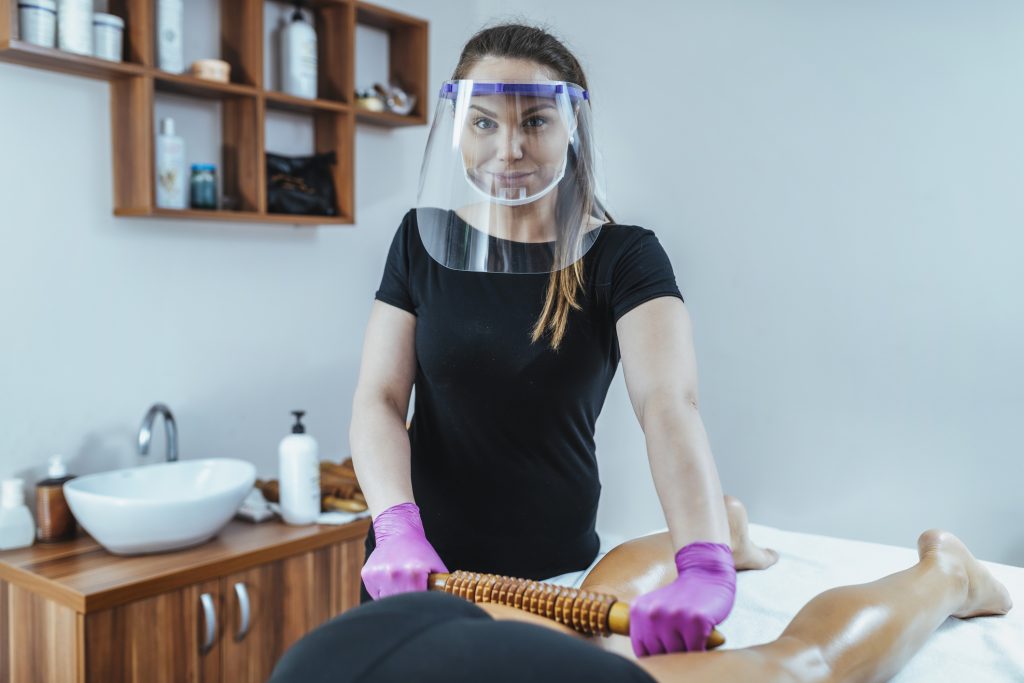


Something has shifted in how Americans think about their health. More people are paying attention to what their bodies are telling them, seeking approaches that treat the whole person rather than a single symptom, and moving away from the idea that professional care begins and ends with a prescription pad. Massage therapy sits at the center of that shift.
Once considered a luxury, it is now widely recognized as a legitimate tool for pain management, stress reduction, injury recovery, and long-term wellness maintenance. Physicians are recommending it. Employers are funding it. Insurance companies are covering it. And the demand for trained, licensed therapists continues to outpace supply.
Swedish massage is the modality at the heart of most of those conversations. One of the first techniques taught in virtually every massage therapist program, and the framework from which every other modality builds. Whether a career in massage therapy is something you are actively pursuing or still weighing the decision, understanding Swedish massage is the right place to start.
Let’s get into the groove and smooth out the details on why massage therapy is a cornerstone of the health and wellness industry.
Swedish Massage Meaning and Origins
A Swedish massage is a full-body therapeutic modality that uses long gliding strokes, kneading, and targeted friction applied to the superficial layers of muscle tissue. The goal is to improve circulation, reduce muscle tension, and promote physical and mental relaxation.
Swedish physiologist Per Henrik Ling developed the technique in the early 19th century by merging European gymnastics with the anatomical principles of his era. His system gave therapists a structured, science-backed framework for soft-tissue work rather than a loose collection of intuitive movements.
This is why the Swedish massage carries more clinical weight than most people expect. It is not just a spa service. It is the foundation that nearly every modern massage modality builds from, and mastering it first is what allows therapists to practice other styles safely and effectively.
The 5 Swedish Massage Techniques Every Student Masters
Students entering a massage therapy program spend significant hands-on time developing five core Swedish massage techniques. Each targets soft tissue differently and serves a specific therapeutic purpose within the session. Together, they give therapists a complete system for reading and responding to a client’s body in real time.
- Effleurage (Gliding): Long, continuous strokes that open the session. Effleurage spreads the massage medium, warms the tissue, and signals to the nervous system that the body is safe to release tension. Most Swedish sessions open and close with this stroke because of how effectively it transitions the client in and out of a relaxed state.
- Petrissage (Kneading): A rhythmic lifting, squeezing, and rolling of the muscle belly. Petrissage works deeper than effleurage and targets localized areas of tension, increasing circulation and supporting metabolic waste removal from the tissue.
- Friction (Circular Pressure): A focused technique applied with the fingertips or thumb. Friction generates heat in a small area and helps break apart fibrous adhesions, or knots, in the muscle. Therapists use it when a client has persistent tightness that effleurage and petrissage alone have not resolved.
- Tapotement (Percussion): Rhythmic tapping, hacking, or cupping across the muscle. Tapotement stimulates the nervous system and can re-energize fatigued tissue. In a relaxation session, it is used sparingly. In a sports or pre-event context, it is applied more actively to wake the tissue up before exertion.
- Vibration (Shaking): A rapid, fine trembling or rocking of a specific muscle group. Vibration encourages deep release and calms an overactive nervous system, making it a useful closing technique before transitioning back to effleurage.
Learning these five techniques in sequence teaches students far more than movement patterns. It develops pressure sensitivity, timing, and the ability to read a client’s body in real time, all skills that transfer directly to every other modality they study afterward.
The Role of Touch and Client Communication
Technique is only part of what makes a Swedish massage effective. The other part is the therapist’s ability to read feedback and adjust in real time, which requires both trained hands and clear communication. The dexterity and physical stamina a therapist develops through consistent practice is what separates competent execution from exceptional care.
Touch sensitivity develops through repetition. In a Swedish session, the therapist uses pressure variation, pace, and stroke sequence to assess the tissue as the session progresses. Areas of guarding, chronic tension, or unusual restriction reveal themselves through feel, not just intake forms. Over time, a skilled therapist learns to interpret what the tissue is communicating and respond accordingly. That skill is not intuitive. It is developed in classroom and clinical environments where students practice on real people under instructor supervision.
Client communication runs alongside that tactile awareness. Before the session begins, a therapist collects health history, identifies goals, and sets pressure expectations. During the session, checking in verbally at key points, particularly when transitioning to a new area or increasing pressure, helps ensure the client feels in control of the experience.
After the session, post-care guidance reinforces the therapeutic work. Therapists who communicate well build practices and a returning book of consistent clients.
Benefits of Swedish Massage
The benefits of Swedish massage extend well beyond relaxation, which is why therapists trained in it find work across clinical, wellness, and sports contexts rather than only in day spas.
According to the American Massage Therapy Association (AMTA), 71% of massage consumers used massage for a health or medical reason in the 12 months ending June 2025, with pain relief, injury recovery, and stress management topping the list.
That same AMTA data shows 94% of Americans believe massage can be effective in reducing pain, and more than half of those who discussed massage with a physician reported their doctor recommended it.
Improved circulation: Effleurage and petrissage strokes move in the direction of venous return, pushing blood toward the heart and drawing freshly oxygenated blood back into the muscle tissue. This supports recovery, reduces soreness, and improves nutrient delivery to the cells.
Stress and anxiety reduction: The slow, sustained rhythm of a Swedish session activates the parasympathetic nervous system. Cortisol levels drop. Serotonin and dopamine production increase. Clients leave with measurably lower physiological stress markers, not just a subjective sense of calm.
Pain relief: Swedish techniques help manage tension headaches, low back pain, and chronic conditions including fibromyalgia and osteoarthritis by reducing muscle guarding and improving tissue pliability around affected areas.
Improved flexibility and range of motion: The tissue warming and passive stretching built into Swedish work increase joint mobility, benefiting athletes, desk workers, and anyone dealing with postural tension or limited movement.
Emotional wellness: Physical tension and emotional stress are not separate systems. Regular Swedish massage reduces the physical symptoms of anxiety and depression, making it a complementary tool in broader mental health care, particularly for clients managing burnout or chronic stress.
Therapists who understand these outcomes can communicate them clearly to clients, which builds trust and positions their practice as clinically relevant rather than purely indulgent.
When to Choose Swedish Massage Over Other Styles
Knowing which massage style fits a client’s situation is a core clinical competency. Swedish massage is not the right choice for every session, but it is the right starting point for most of them. Here is how a therapist thinks through that decision.
Swedish massage is the right choice when:
- A client is new to massage and has no prior bodywork experience.
- The primary goal is stress reduction, relaxation, or general wellness.
- The client has anxiety, high sensitivity to pressure, or a low pain threshold.
- The session is meant to support circulation or aid recovery from mild physical fatigue.
- A client is managing a chronic condition where gentle, systemic work is safer than targeted pressure.
Another style may be more appropriate when:
- There is a specific injury, chronic pain condition, or structural imbalance to address (deep tissue or sports massage).
- The client is an athlete preparing for or recovering from competition (sports massage).
- The focus is on connective tissue restriction or postural correction (myofascial release).
- A client is pregnant and requires positioning and pressure modifications (prenatal massage).
- The session involves acupressure points or energy meridians (Shiatsu).
In practice, therapists often blend techniques across sessions. A session may begin with Swedish strokes for warm-up, incorporate deep tissue work on a specific problem area, and return to Swedish strokes to close. Understanding when to use each approach, and why, is what separates a competent technician from a skilled practitioner.
Massage Styles and When to Use Them
Swedish massage is one modality within a much broader field. Students in a massage therapy program learn Swedish as the foundation and then build toward specialization in other styles. Understanding the full landscape helps aspiring therapists identify where their interests and clinical strengths point.
Swedish massage: Full-body relaxation, improved circulation, stress reduction. The foundational modality and most commonly requested style worldwide.
Deep tissue massage: Addresses chronic muscle injury, deep adhesions, and structural tension. Uses slower, more concentrated pressure targeting connective tissue, tendons, and fascia.
Sports massage: Designed for athletic performance and recovery. Applied before, during, or after competition or training to prevent injury, reduce soreness, and improve range of motion.
Prenatal massage: Modified Swedish techniques adapted for pregnancy. Addresses lower back pain, swelling, and stress while accommodating positioning restrictions for the safety of the client and baby.
Hot stone massage: Smooth, heated stones are used alongside or in place of the therapist’s hands to apply warmth and pressure. Particularly effective for deep muscle relaxation and circulation.
Myofascial release: Focuses on the connective tissue network surrounding the muscles. Uses sustained pressure and gentle stretching to release restrictions in the fascia.
Shiatsu: A Japanese technique using rhythmic pressure along the body’s energy meridians. Works with acupressure points rather than soft tissue manipulation.
Each style has its own application, contraindications, and ideal client profile. Most therapists develop a primary specialty while maintaining competency across several modalities, making them more versatile and more valuable as professionals.
Soft Tissue vs. Deep Tissue: Understanding the Difference
One of the most useful distinctions for both therapists and clients to understand is the difference between soft tissue work and deep tissue work. The terms are often used interchangeably, but they describe fundamentally different clinical approaches.
Soft Tissue Massage
Soft tissue massage targets the superficial layers of the body: skin, subcutaneous fat, and the outer layers of muscle. Swedish massage is the clearest example. The pressure is moderate, the strokes are broad, and the goal is systemic rather than localized. Soft tissue work is appropriate for nearly all clients because the risk of adverse reaction is low and the entry threshold for comfort is minimal.
Deep Tissue Massage
Deep tissue massage works through the superficial layers to reach the deeper structures: fascia, tendons, ligaments, and the deeper muscle bellies. The pressure is intense and concentrated. The pace is slow. Deep tissue work is appropriate when a client has a specific area of chronic dysfunction, a structural imbalance, or dense scar tissue that soft tissue techniques have not resolved.
The practical difference comes down to this: if a client needs to relax and recover, soft tissue is the right call. If they need structural change or targeted rehabilitation, deep tissue massage may be necessary.
Swedish vs. Deep Tissue vs. Other Massage Styles

Clients frequently ask about Swedish vs deep tissue massage, and the comparison helps clarify which session type fits their situation. The table below extends that comparison across several common styles.
Massage Types Comparison
For students, this comparison reveals how much context matters in clinical decision-making. The right modality depends on the client’s history, goals, pressure tolerance, and health status. Being able to assess those variables quickly and recommend the appropriate approach is a skill that develops in the classroom and the clinic, not just from reading a textbook.
What to Know About Becoming a Licensed Massage Therapist
Massage therapy is a licensed profession in 45 states plus Washington, D.C., Puerto Rico, and the U.S. Virgin Islands. The path from enrollment to licensure follows a consistent structure across most states, though the specific requirements vary by jurisdiction.
Education: Most states require between 500 and 750 hours of approved education from an accredited massage therapy program. The curriculum covers anatomy, physiology, pathology, massage techniques, and ethics. Clinical practice hours are built into accredited programs and are required before a student can sit for the licensing exam.
The MBLEx: The Massage and Bodywork Licensing Examination (MBLEx) is the national standard licensing exam, administered by the Federation of State Massage Therapy Boards (FSMTB) and accepted by 46 of the 49 regulated U.S. jurisdictions. Most students take the MBLEx after completing their program. Passing scores are valid permanently and can be transferred to other states through the FSMTB system.
State licensing: A license is required in each state where a therapist practices. True reciprocity between states does not exist, but most states offer a licensure by endorsement pathway that allows licensed therapists to apply in a new state using existing credentials, without retaking the MBLEx, as long as their education meets the new state’s hour requirements.
Continuing education: Most states require continuing education (CE) credits for license renewal, typically every two years. Requirements range from 5 to 36 hours per renewal cycle, depending on the state, with ethics CE commonly mandated. Therapists earn CE credits through workshops, specialty certifications, and industry courses offered by organizations like the AMTA and ABMP.
The governing body: The Federation of State Massage Therapy Boards (FSMTB), oversees the MBLEx and supports state regulatory boards nationwide. The American Massage Therapy Association (AMTA) and Associated Bodywork and Massage Professionals (ABMP) are the two major professional membership organizations. Neither issues licenses, but membership in either provides liability insurance, CE resources, and professional credibility that employers and clients recognize.
Where Massage Therapists Work
The range of practice settings available to a licensed massage therapist is broader than most people assume when they start a program. The field is not limited to day spas, and growth in clinical and corporate applications has expanded the options considerably.
Common settings include day spas and resort spas, massage franchise chains, chiropractic offices, physical therapy and sports medicine clinics, hospitals and integrative health centers, corporate wellness programs, athletic training facilities, cruise ships, and hotel spas. Therapists who prefer autonomy often build independent practices through private offices or mobile services, where they set their own schedules, rates, and client mix.
Franchise ownership is another path some experienced therapists pursue. National massage franchise brands operate on a membership model that drives consistent client volume, making them more predictable to operate than a solo private practice. Independent studio ownership is also viable for therapists with a strong client base and an interest in building a business rather than just filling a schedule.
The Bureau of Labor Statistics (BLS) projects employment of massage therapists to grow 15% from 2024 to 2034, faster than the average for all occupations, with approximately 24,700 new positions expected each year across the decade.
Growth is driven in part by increased acceptance of massage as a legitimate healthcare tool, an aging population with growing demand for pain management and mobility support, and expanding corporate wellness programs.
Gwinnett Colleges & Institute: A Strong Starting Point for a Wellness Career
Massage therapy is one of the few healthcare-adjacent careers where a motivated person with a high school diploma and no prior experience can enter a training program, earn a licensable credential, and begin working in the field within a year. It does not require a four-year degree, years of prerequisite coursework, or a specific professional background. What it requires is the right training environment and a genuine interest in the work.
That combination of a short timeline, a low barrier to entry, and real hands-on skill-building is what draws many students to a vocational school path in the first place.
The Health and Wellness program at Gwinnett Colleges & Institute is designed for people starting from different places: recent high school graduates entering the workforce for the first time, working adults changing careers without putting their lives on hold, and people returning to the workforce after time away. The entry requirement is a high school diploma or GED. From there, the program takes over
The Massage Therapy program at Gwinnett Colleges & Institute is built around hands-on training from the first weeks of enrollment. Students choose from a nine-month day program or a twelve-month evening program, making it possible to train without walking away from existing obligations. Anatomy and physiology coursework runs alongside clinical hours, so the science and the skill develop together. Instructors are working professionals who bring current, field-tested knowledge into the classroom rather than teaching from a fixed curriculum alone.
Students also gain access to the school’s massage clinic before graduation, where they practice on real clients under licensed instructor supervision. The program also covers business fundamentals, client communication, and professional ethics, the competencies that textbooks often skip but that determine whether a therapist builds a sustainable practice or struggles to retain clients after the first few sessions.
For students who want to go further, Gwinnett Colleges & Institute also offers the
Massage and Natural Health program, an Associate of Applied Science degree that expands the clinical and theoretical foundation for those interested in a broader scope of wellness practice.
Gwinnett Colleges & Institute is accredited, and campuses are located in Marietta, Lilburn, and Roswell, Georgia; Orlando and Sarasota, Florida; and Raleigh, North Carolina, giving students across the Southeast access to in-person training without relocating. Financial aid is available for those who qualify, and veterans’ benefits are accepted.
For anyone considering a career in health and wellness and looking for a structured, practical path to get there, the massage therapy program at Gwinnett Colleges & Institute offers a direct route from where students are now to where they want to be.
Start Your Massage Therapy Career at Gwinnett Colleges & Institute
Swedish massage is where massage therapy education begins and where many careers are built. At Gwinnett Colleges & Institute, students graduate with the technical and client-communication skills and the professional foundation to compete in a field that continues to grow across clinical, wellness, and corporate settings.
Explore our massage therapy program or contact admissions to learn what training at GWI looks like and how to get started.
Common Questions About Swedish Massage Therapy Training
What Is the Point of a Swedish Massage?
A Swedish massage relaxes the entire body, increases circulation, and reduces muscle tension. For clients, it serves as a preventive wellness tool for managing daily physical and emotional stress. For therapists, it also functions as a full-body assessment, since working through the tissue systematically reveals patterns of restriction that may need additional attention in future sessions.
What Is the Difference Between Swedish and Regular Massage?
“Regular massage” typically refers to Swedish massage. It is the foundational style practiced at most spas and wellness clinics and the baseline from which other modalities are taught. Techniques like deep tissue, sports massage, and trigger point therapy all build on the Swedish framework.
Is a Swedish Massage Relaxing or Painful?
A Swedish massage should feel deeply relaxing. Because it focuses on the superficial muscle layers rather than deep connective tissue, the pressure is sustained and fluid rather than intense. If a client experiences discomfort, a trained therapist adjusts pressure immediately. Communication between client and therapist is part of professional practice, not an interruption of it.
Can massage help with neuropathy and other medical conditions?
Massage therapy, including Swedish massage, is studied as a complementary approach to peripheral neuropathy. Improved circulation and nervous system stimulation may ease symptoms like tingling, numbness, and discomfort in some clients. Massage does not treat neuropathy and works alongside medical care, not in place of it. Therapists working with neuropathy clients should take a full health history and coordinate with the client’s physician when appropriate.
What Is the Quickest Way to Become a Massage Therapist?
The fastest path is enrolling in an accredited massage therapy program that meets your state’s minimum education hour requirement, typically 500 hours. Full-time programs can be completed in as little as nine months.
After graduation, passing the MBLEx and submitting a state license application is the next step. Processing typically takes four to eight weeks, depending on the state.
Choosing an accredited program with strong clinical hours from the start puts graduates in the best position to pass the exam and enter the field with practical experience already behind them.